Talking Popcorn
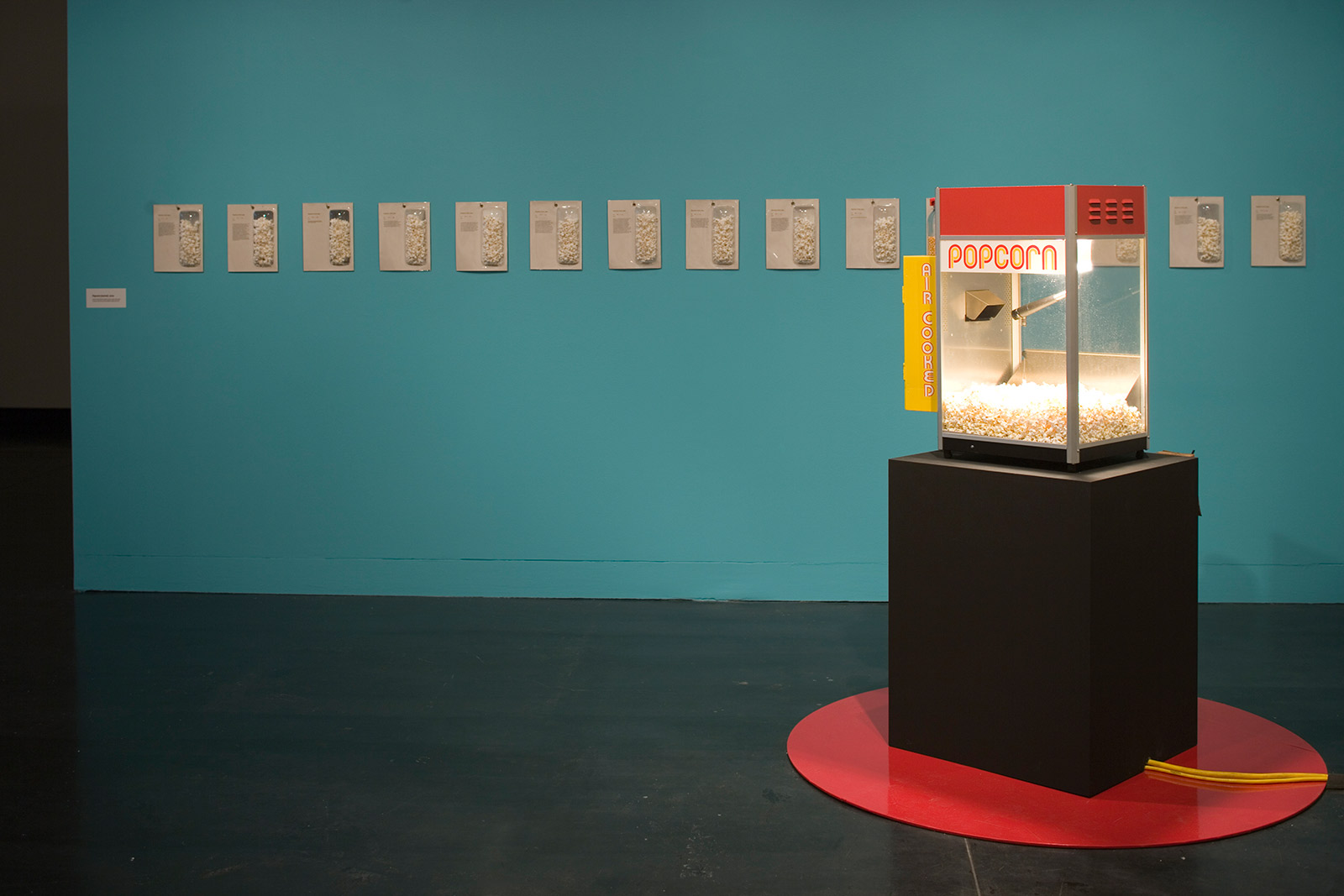
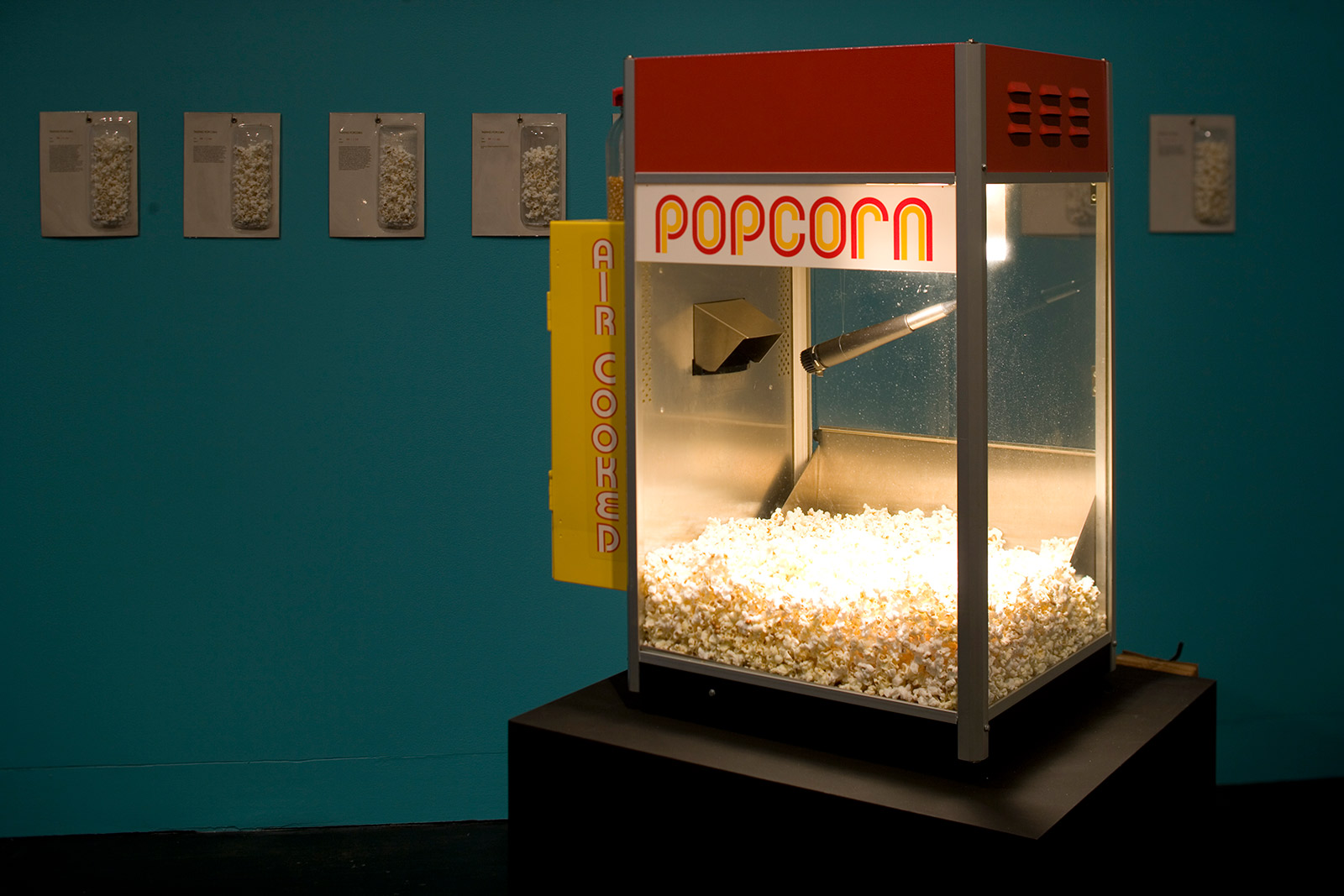
Talking Popcorn, 2001. Popcorn machine, black pedestal, red vinyl base, microphone, laptop with custom-written Morse code program, printed paper bags, popcorn. Dimensions variable.
I remember perusing music courses in the graduate school course catalogue at UCSD and suddenly seeing one that made my heart leap: “Music, Flight, and Morse Code.” I’ve loved the sound of Morse code as long as I can remember. During my family’s summers in Finland, I often switched the radio to shortwave mode and trolled the frequencies to try to hear communications from ships in the Baltic Sea, pausing at the spots where I discovered the skittering, melodious strands of rapid sounds that sounded like music to me—but, I was told, it was actually language if you knew how to listen to it the right way.
I immediately signed up for the class. (It was taught by a composer who had previously been a pilot.) Our final, in Morse code, was by far the most enjoyable experience I’ve ever had with a test. My own facility was never impressive, but the class sparked my deep admiration for anyone who was really good at it. And if you were, I thought, maybe anything with an irregular, rhythmic pattern could be telling you something. I even pictured a character, perhaps a retired navy guy, who would put on the popcorn, sit back in a rocking chair, and laugh at all the jokes. I should make a machine that translates the sound of popcorn, I told myself. It took many years before that happened.
Talking Popcorn is a commercial popcorn machine hooked up to a hidden computer that decodes the sounds of popping popcorn using Morse code and speaks out the results in a simultaneous spoken translation. It is my Frankenstein; it has called me “mom.” When you encounter Talking Popcorn, you are only able to hear—not read—what the popcorn is saying. You listen in a way akin to when conversing in a language that you don’t know very well. Your fervent desire for intelligible communication increases your fluency of Popcornese dramatically.